


Allison Sayre, MSN, WHNP-BC
Benefits of Shiitake (Lentinula edodes)
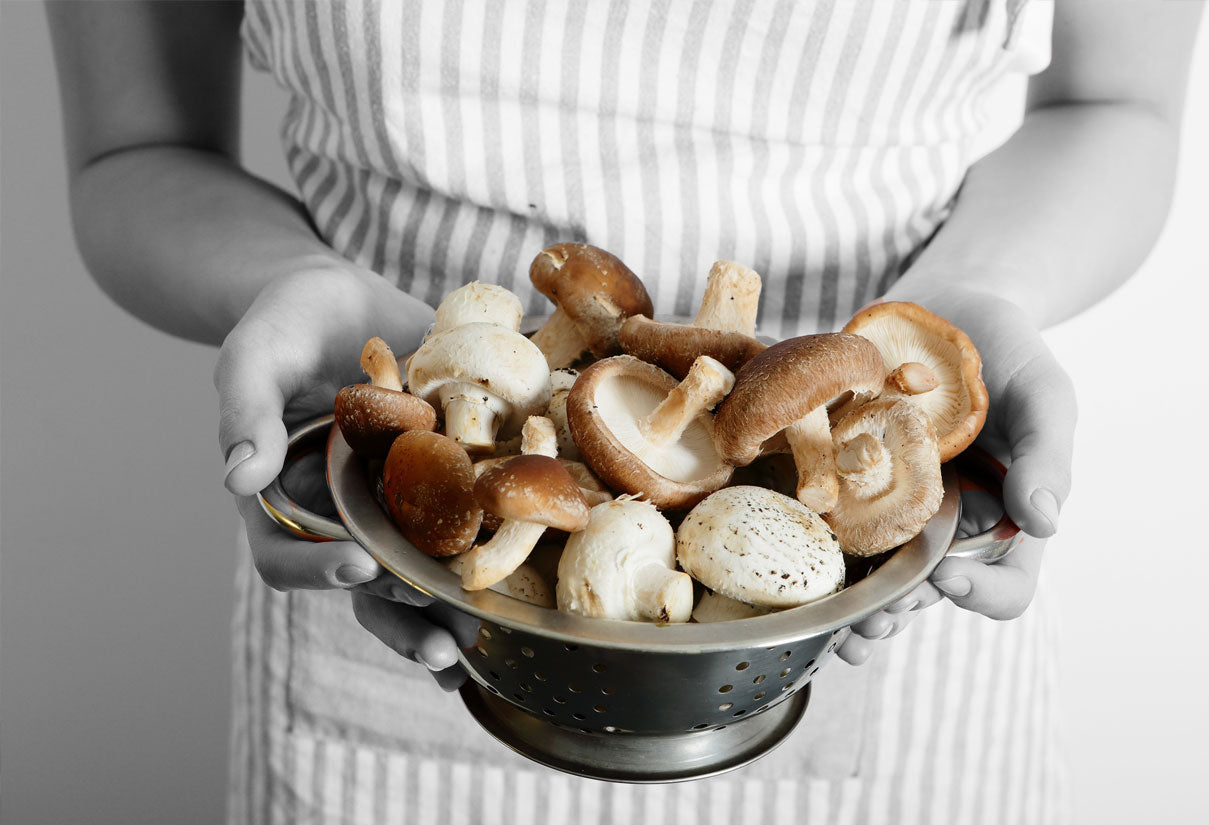
Shiitake mushrooms are a world-wide culinary staple as the second most popular mushroom on the global market. Beyond their rich umami flavor, the benefits of shiitake mushrooms extend far into human health. There is also a bounty of clinical data supporting their health-supportive properties, especially related to immune function and thyroid health.* Below is a research-forward overview where we separate what’s known about whole-food shiitake versus fruiting-body extracts (notably the β-glucan “lentinan”).
What Makes Shiitake Mushrooms Special? These Key, Active Components
β-Glucans (Lentinan)
Shiitake’s signature polysaccharide is a branched β-glucan called lentinan, concentrated in the fruiting body of the mushroom. Lentinan from shiitake has demonstrated an ability to protect and promote cellular integrity through activation of the host’s immune system.* [1]
Lentinan is well known as a type of immunomodulating biological response modifier (BRM).* Specifically, lentinan binds to lymphocyte surfaces or serum-specific proteins, activating macrophages, T-helper cells, natural killer (NK) cells, and other active immune responses.* This leads to an increase in the production of antibodies as well as interleukins (IL-1, IL-2) and interferon (IFN-) released upon activation of immune cells.* [1]
Eritadenine
A purine-like molecule linked to lipid metabolism in animals, eritadenine occurs naturally in shiitake mushrooms. Human evidence remains limited and mixed, but this compound is an inhibitor of S-adenosyl-L-homocysteine hydrolase, a biosynthetic precursor to homocysteine.* [2] Animal studies suggest it may help to support healthy cholesterol and blood pressure.* [2] These findings highlight additional benefits of shiitake mushrooms beyond immune support.
Ergothioneine
Ergothioneine is a diet-derived amino acid with potent antioxidant activities.* Although this amino acid is only found in bacteria and fungi food sources, not plants or animals, the human body has evolved a highly selective transporter for it.* [3] Ergothioneine is actively transported and concentrated in tissues prone to oxidative stress (such as red blood cells).* [3] While ergothioneine isn’t an “immune booster” per se, it may support redox reactions necessary for healthy immune responses.* [3]
Vitamin D (from UV-exposed mushrooms)
When exposed to UV light, shiitake mushrooms produce vitamin D2, D3, and D4. While D3 is the only form of vitamin D produced in human skin, all three are immunologically relevant in human vitamin D signaling. Clinical studies show that ingesting 2000 IUs of vitamin D in mushrooms is as effective as ingesting 2000 IUs of vitamin D in a supplement when it comes to raising and maintaining blood levels of 25-hydroxyvitamin D.* [4]
The Benefits of Shiitake Mushrooms for Immune Resilience
Immune resilience is the capacity to respond to challenges (e.g., pathogens, stressors) with an effective, proportionate response and help the body return to its homeostatic baseline. The benefits of shiitake mushrooms have been studied extensively in this area.
Liquid cultures, chloroform, ethyl acetate, water and dried fruit body extracts of shiitake have all demonstrated an ability to actively discourage the growth of gram positive and gram-negative bacteria, yeasts, and mycelial fungi, including dermatophytes and phytopathogens.* [1]
In human trials with shiitake and shiitake-derived extracts, resilience shows up as: (1) favorable changes in front-line innate cells (NK, NKT, γδ T cells), (2) healthier mucosal defenses (e.g., secretory IgA), (3) maintenance of immune competence in the face of seasonal stressors, and (4) clinical signals (such as improved prophylactic response), without evidence of harmful over-activation.* [1][5]
Natural Killer Cells and Thyroid Health
A complex relationship exists between thyroid hormones and natural killer (NK) cell activity. Thyroid hormones, particularly triiodothyronine (T3) and thyroxine (T4), play a role in modulating immune response. [6] One of the ways in which this happens is by promoting natural killer (NK) cell cytotoxicity and cytokine responsiveness. [6] Conversely, thyroid dysfunction or low thyroid hormone levels are correlated with reduced natural killer (NK) activity. [6]
These interactions suggest that thyroid function can influence innate immunity, and those with thyroid concerns may benefit from lifestyle or nutritional modifications to support the innate immune system, as a complement to protocols for thyroid support.*
Whole-Food Shiitake
The highest-quality “food-as-intervention” trial to date, randomized healthy adults to eat 5 g or 10 g of dried shiitake daily for 4 weeks. Compared with their own baselines, participants showed greater proliferation and activation of gamma delta T (γδT) cells and natural killer–T (NKT) cells, higher salivary IgA, and lower C-reactive protein (CRP), alongside a cytokine response that was consistent with activation without excess.* [5]
The study implies that for everyday immune function, cooked, regular shiitake intake may enhance front-line readiness (NKT/γδ T cells) and mucosal protection (sIgA); two pillars of resilience relevant to day-to-day immune threats.* This demonstrates tangible shiitake mushroom benefits achievable through whole-food consumption.
A second, diet-style trial (double-blind, placebo-controlled) used a shiitake-containing snack bar for ~2 months in adults.* Those who ate the snack bar daily tended to have more balanced levels of triglycerides and redox balance, while LDL and total cholesterol levels were unchanged. [7] This isn’t a strictly immunity-focused conclusion, but it supports the idea that culinary-dose shiitake can benefit physiology safely in healthy adults.
Fruiting-Body Extracts (Lentinan)
“Shiitake extract” can mean many things. Some oral extracts are derived from mycelium, not fruiting bodies, and most clinically-significant fruiting-body extract data comes from studies that used intravenous lentinan, which is quite different from eating whole shiitake mushrooms. For example, in one particular study, 2 mg lentinan was administered intravenously, seven days before patients underwent heart surgery. Compared to controls, lentinan appeared to protect natural killer T cell activity and accelerated CD4+ recovery, providing evidence of innate immune preservation during a profoundly stressful event.* [8]
There are also human studies that examined oral fruiting body extract, either lentinan purified from the fruiting body of shiitakes, or beta-glucan-enriched extract from shiitake fruiting bodies. These studies show that patients taking oral shiitake extracts as a complement to other medical treatments experienced improved quality of life and fewer adverse effects of treatment, compared to controls. * [9][10]
And the benefits of shiitake mushrooms continue! One study of 52 adults with mildly-imbalanced cholesterol levels found that beta-glucan-enriched fruiting body extract had a modulating effect on colonic microbiota. [11] Although this particular study was not focused on markers of immune function, the connection between the microbial community of the gut and immune function in its host is well-elucidated.
Conclusion: The Shiitake–Immune Connection
Natural killer (NK) cells bridge innate and adaptive immunity by recognizing abnormalities when they arise and coordinating an effective response. The best human data tying shiitake to natural killer T cells specifically, come from the whole-food trial above. A month of cooked shiitake can benefit sIgA, NKT/γδ-T cells, and CRP abundances. * [5] This triad is consistent with immunomodulation and better immune readiness.*
Mechanistically, β-glucans such as lentinan, found in fruiting body extracts, likely engage with receptors on innate immune cells, leading to downstream crosstalk to prime natural killer T and γδ-T cells.*[1] Lentinan’s clinical behavior (preserving natural killer cell function under stress) fits the same model of benefitting both trained and innate immune function.* [8]
Immune and thyroid function both typically decline with age, and natural killer cell activity may be negatively affected by a lack of thyroid hormones.*[6] Therefore, modalities of support for natural killer function may be of specific interest to those who seek support for both thyroid and immune systems.
Disclaimer:
The information provided is for educational purposes only. Consult your physician or healthcare practitioner if you have specific questions before instituting any changes in your daily lifestyle including changes in diet, exercise, and supplement use.
Allison Sayre, MSN, WHNP specializes in women's health and functional medicine, blending both traditional and integrative approaches. With over 18 years of experience, she has empowered women to reclaim their health through personalized nutrition and supplementation, hormone balancing, and lifestyle modifications.
She received her Bachelor of Science from Mount Carmel College of Nursing and her Master of Science from the University of Cincinnati. She has been a certified women’s health nurse practitioner since 2014 and has continued her education and training in functional medicine from both the Institute for Functional Medicine as well as the American Academy of Anti-Aging Medicine.